What does it mean to pray “your kingdom come, your will be done” as Jesus taught us to pray? It is easy to conflate our will with God’s will, to baptize our own agendas as God’s agenda. What is the harm done in Jesus’s name when we can’t differentiate our will with God’s will? What damage is there to ourselves and our Christian witness when contra reality, we deceive ourselves into believing that we are building God’s kingdom and doing God’s work?[i]
In this article, I’m going to discuss the particular danger of conflating the kingdom of God and the kingdom(s) of man in American political life. How might we as participants in American political life know when we have conflated the kingdoms of man with the Kingdom of God?[ii]
One indicator that we have conflated the two kingdoms (the Kingdom of God and the kingdoms of man) is when we claim the mantle of God’s blessings and a divine mandate, without care for knowing and portraying the heart of God. Here is a dose of reality: baptizing our political agendas in Christian language won’t give us either a divine mandate or his blessing. Reciting a prayer or making a show of religiosity won’t transform God into our personal genie in a bottle.[iii]
More recently, the conflation of the two kingdoms has been on full display from national Christian leaders. On April 13, 2026, Trump posted a picture of himself as a Jesus-like figure, wearing white and red robes and healing a man. You’ve probably seen the blasphemous image. On April 15th, Franklin Graham issued a statement saying he believes the image controversy was “a lot to do about nothing.” He repeated Trump’s narrative hook, line, and sinker that Trump saw himself as a doctor helping others. Graham reframed anyone who would criticize Trump’s post as “his enemies are always foaming at the mouth at a possible opportunity to make him look bad.”[iv] Finally, Graham praised Trump as the most pro-Christian president in his lifetime.[v]
Also on April 15th, Pete Hegseth, secretary of our rebranded “Department of War” quoted a violent prayer from Pulp Fiction in his prayers for “great vengeance and furious anger” in the U.S. war against Iran.[vi] One might have hoped that Hegseth, a member of a church might have schooled us in just war theory, a Christian tradition dating back to Augustine.[vii] Instead, we were given a vision of the blessed life through the lens of Quentin Tarantino.
In 2016, Trump courted the evangelical community by promising “We’re going to protect Christianity.”[viii] Why is “protection” so appealing to Christians? Does God need us to protect Christianity? The same misguided inclination exists in our churches when claims of abuse are made, to defend institutions and those in power in the name of protecting Christianity.
In his article, “Political Witness and the Reign of the Lamb,” Trevor Lawrence explains the temptation we face this way:
“That ancient crafty serpent is happy to manipulate imperial beasts to exert social, political, and economic pressure to deny Jesus. But if he cannot make us leave the Lamb, he is content to make us look so much like the Dragon that nobody can tell the difference. If he cannot get you to turn your back on the Lamb, he is more than happy to have you try to accomplish the Lamb’s ends using the Dragon’s means—and to become more dragon-like in the process.
These twin temptations are present to theologians and biblical scholars as well: to provide religious legitimation for the empire’s idols, ethics, and institutions; and to provide religious legitimation for the church’s dragon-like power plays, culture wars, political alliances, eschewal of Christian virtue in the name of defending Jesus, and attempts to bridle the power of the beast for so-called kingdom purposes.”[ix]
What Would Chuck Colson (A Redeemed Hatchet Man) Say to Us Today?
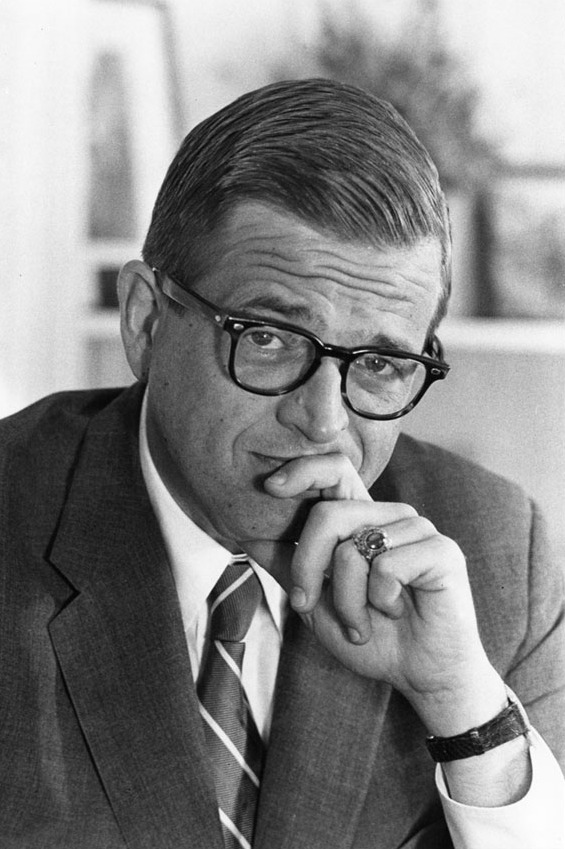
Chuck Colson died in 2012 but I believe he has some words of wisdom for our situation today. While Colson was keen to not endorse political candidates or parties, he worked hard to help Christians build a Christian worldview. What would Colson say to us about the conflation of the kingdoms?
Before his conversion to Christianity, Colson was named President Richard Nixon’s “hatchet man” due to his reputation of attacking political opponents and being ruthless with political enemies. His abuse of power in the Watergate Scandal resulted in his imprisonment in 1974. Colson’s conversion to Christ resulted in a transformed life and a renewed mind. How did his views on the proper use and source of power change?
In Chuck Colson’s book, “Kingdoms in Conflict,” a book written in 1987, he writes:
Nothing distinguishes the kingdoms of man from the Kingdom of God more than their diametrically opposed views of the exercise of power. One seeks to control people, the other to serve people; one promotes self, the other prostrates self; one seeks prestige, and position, the other lifts up the lowly and despised.[x]
Colson notes that a Christian surrenders his sinful desires and lives for God’s glory. Those who act as servants of God should “treat power as a humbling delegation from God, not as a right to control others.”[xi] Jesus didn’t give us any exceptions to misuse power because of any anticipated misuses of power by a political opponent.
This is why use of power is not a small thing. It displays to the watching world where our hope is and what gods or God we actually give our allegiance to.[xii]
Colson reminds Christians to relinquish their worldly view of power and discover a much different but deeper power that originates from God, the source of power. “The most important restraint on power… is a healthy understanding of its true source.”[xiii] Jesus said, “If anyone wants to be first, he must be the very last, and the servant of all.”[xiv] Therefore, “the Christian understanding of power is that it is found most often in weakness” and surrender of man’s sinful desires.
Colson reminds us of the nature of God’s kingdom. The kingdom of God is a spiritual kingdom ushered in at the time of Jesus.[xv] His Kingdom is not of this world. “The Jews of first-century Palestine missed Christ’s message because they, like many today, were conditioned to look for salvation in political solutions.”[xvi]
How easy it is for us to put our hope in political solutions and earthly dynasties, which will all come to an end. Jesus’ primary mission on earth was to save sinners but political or earthly kingdoms can not save people. The gospel message of freedom and redemption from sin is foundational to a proper understanding of what politics should entail and the function and limits of government. With this view, we find that politics is important, but not the all-encompassing priority of Christians.[xvii]
Colson reminds us: “While human politics is based on the premise that society must be changed in order to change people, in the politics of the Kingdom it is people who must be changed in order to change society.”[xviii]
Our allegiance to the King means we would desire that others know freedom and salvation in Jesus Christ. Society is changed one heart at a time, not by winning elections. “To suggest that electing Christians to public office will solve all public ills is not only presumptuous and theologically questionable, it is also untrue.”[xix]
While the world tells us that the ends justify the means, Colson reminds Christians to remain faithful and leave the results to God. He reminds us that the Kingdom of God has already been inaugurated and we wait for the full consummation of God’s Kingdom.
Colson understood the principle that men and women are made in God’s image. Even the worst of us bear God’s image. Colson was well known for his ministry to prisoners. He championed initiatives to improve prison conditions, encouraging restorative justice and arguing for punishments that fit the crime. He advocated for legal reform to help reduce recidivism and help convicts get back on their feet and make a proper living.
Colson spoke out against the demonization of immigrants pointing out the ungodly fabrication of facts about how they are mainly violent criminals. “Christians must work to see that the immigration debate generates light instead of heat. We must insist that the illegal-immigration issue be addressed without treating millions of Americans, many of whom have died protecting our country, as a kind of fifth column. That is the very least we can do if we are obedient to God’s command to welcome strangers.”[xx] Fifth column refers to the concept of a clandestine group operating to undermine the larger group from within.
What’s the Danger of Conflating the Two Kingdoms?
When the distinctions between the two kingdoms are blurred, we misrepresent the beauty of the Kingdom of God to a world that needs to hear the good news of the gospel. The blurring of the kingdoms hurts the church’s witness.
Ralph Lugo explains in his article, “Kingdom of This World vs. the Kingdom of God: A Diagnostic for Our Moment”:
“What makes the current blurring particularly potent is the feedback loop it creates between political and religious identity. The political movement adopts Christian language, which draws evangelical Christians in. Evangelical leaders bless the movement, which gives it religious credibility. The movement’s rallies begin to feel like revival services: the music, the fervor, the sense of cosmic stakes, the experience of belonging to something larger than oneself. Religious identity and political identity reinforce each other until they are functionally inseparable.
The result is that criticism of the political movement is experienced as an attack on the faith. And criticism of the religious leaders who bless the movement is experienced as political opposition. The categories have merged. The feedback loop is complete.
This is not a new danger. Constantine’s conversion in the fourth century initiated a fifteen-hundred-year experiment in exactly this fusion, with results the church is still reckoning with. What the Constantinian settlement produced was not the Kingdom of God advanced through political power. It produced a church that lost its capacity to speak prophetically to power because it had become power. The royal priesthood traded its distinctiveness for influence and discovered, generation by generation, that it had purchased the influence with the one thing it could not afford to spend.
… The blurring of the kingdoms does not produce a more Christian politics. It produces a less Christian church. And that is the diagnosis that the biblical framework, from Babel to Egypt to Solomon to the court prophets, has been preparing us to see.”[xxi]
The Way Forward
In 2009, Colson stated in an interview that “[y]ou can’t fix politics or culture unless you fix the church. What we’re seeing in society today is a direct consequence of the church failing to be the church.”[xxii]
Let’s consider this: The Kingdom of God does not need culture warriors to defeat and crush the left at any cost. It needs Christ followers who are willing to imitate Jesus and live a cruciform life. Ralph Lugo says it this way:
“The church’s calling in this moment is not to win the culture war. It is to be the kind of community that makes the culture war’s entire framing look small: a community so marked by cruciform love, so committed to the vulnerable, so fearless in truth-telling, so rooted in the coming Kingdom, that it cannot be mistaken for a political action committee dressed in religious language.”[xxiii]
Scripture tells us not to fear those who can kill the body. Rather, we are to fear God. This is where true blessedness and safety lies.[xxiv] Tim Mascara reminds us that the gospel doesn’t produce warriors, it produces martyrs. He also reminds us that we do not advance the gospel by abandoning the way of the gospel. In his article, “Biblical Warriors Aren’t the Answer – Jesus’ Way of the Cross Is”, Tim writes:
“But Jesus stood on that hillside and turned the world’s power dynamics upside down. He didn’t call for warriors; He called for the meek, the merciful, and the peacemakers (Matthew 5:3-12). He told His followers that their “protection” wouldn’t come from a sword or a Christian president, but from a Father who sees in secret.”[xxv]
May we be encouraged to walk by faith and imitate Christ Jesus. His is an everlasting Kingdom that has no end. In Christ Jesus we have true hope. Luther’s Hymn, A Mighty Fortress is Our God, says it this way, “let goods and kindred go, this mortal life also; the body they may kill: God’s truth abideth still; His kingdom is forever!”
Or in the words of Jesus, “But seek first the kingdom of God and his righteousness, and all these things will be provided for you.” (Matthew 6:33 CSB)
[i] Michael Kruger explains that in spiritual abuse, an abuser appears to be building God’s kingdom when in reality, he is building his own kingdom to preserve his own power and authority. If this temptation applies to church leaders, why wouldn’t this temptation be common to politicians, even those that claim to be Christian? See my book review of Michael Kruger’s book, Bully Pulpit.
[ii] Caleb E. Campbell proposes some diagnostic questions to discern political idolatry in his article “Burning Incense on the Altar of America.”
[iii] See Jeremiah 7:3-8, 1 Samuel 15:22, Amos 5:23-24. See also 1 Samuel 4-6, where Scripture memorializes God defending his own honor and name when the Israelites used the Ark of the Covenant as a good luck charm in battle without care towards obeying God’s commands. While it would be bad theology for us to import the theocratic nature of Israel to create a parallel theonomic system in America today, we can learn important lessons from the Israelites on their misplaced trust and the untameability of God. God can not be tamed or used like a genie in a bottle. God withdraws his protection of the Israelites when they are disobedient to him. The Israelites lose their battle and God guards his own honor, even allowing the Ark of the Covenant to be captured by the Philistines and the Philistines to be put in fear of him.
In 2020, Trump went posing in front of a church with a Bible for a photo-op.
[iv] Franklin Graham defended Trump and finds Trump credible when Trump says he thought he was posting a picture of himself as a doctor.
[v] Ralph Lugo comments on the Court Evangelical Dynamic saying: “1 Kings 22 teaches that a true prophet of God prioritizes divine truth over political favor, even when facing intense pressure to conform, in contrast to “court prophets” who serve as sycophantic tools legitimizing the ruler’s agenda. Micaiah, in 1 Kings 22, stands against four hundred court prophets who unanimously predict victory for Ahab. They are not lying, exactly. They have simply so thoroughly identified God’s interests with the king’s interests that they can no longer distinguish between them.” Quote from his article: “The Kingdom of This World vs. the Kingdom of God: A Diagnostic for Our Moment”
[vi] The Guardian reports “Hegseth channels his inner Tarantino with fake Bible verse from Pulp Fiction.”
[vii] Brad East wrote an article entitled, “Just War Theory is Supposed to Be Frustrating” that caught my eye. Donald P. Shoemaker notes that in 2011, Chuck Colson “declared that the war in Afghanistan had long ceased to be a “just war” by the classical definitions.”
[viii] Trump courted the evangelical vote by appearing at Liberty University.
I remember being appalled back in 2016 when Jerry Falwell Jr, the president of Liberty University, the world’s largest evangelical university, tweeted an endorsement photo of Trump, with a Playboy magazine cover featuring a promiscuous Trump hanging out in the very same photo, behind Becki Falwell’s shoulder. The infamous tweet is found here.
Tim Alberta’s book, “The Kingdom, The Power, and the Glory” details how Mark Demoss was ousted from being chairman of the executive committee of Liberty University’s Board of Trustees when he opposed the endorsements of Trump being made by Falwell Jr.
[ix] Quote from Trevor Laurence’s article: “Political Witness and the Reign of the Lamb” posted on June 20, 2024.
[x] Colson, Charles. Kingdoms in Conflict. William Morrow/ Zondervan Publishing House, 1987. 274.
[xi] Ibid. 275.
[xii] I wrote about how our use of power reveals our hearts in my article, Towards a Right Use of Power.
[xiii] Kingdoms in Conflict. 273.
[xiv] Mark 9:35.
[xv] Mark 1:15
[xvi] Colson, Charles. Kingdoms in Conflict. William Morrow/ Zondervan Publishing House, 1987. 84.
[xvii] Colson warned us: “We made a big mistake in the ’80s by politicizing the Gospel. We ought to be engaged in politics, we ought to be good citizens, we ought to care about justice. But we have to be careful not to get into partisan alignment.”
[xviii] Kingdoms in Conflict. 94.
[xix] Ibid. 303.
[xx] The Christian Post quotes Colson here. It seems the quote was taken from the June 8, 2006 Breakpoint segment.
[xxi] Quote from Ralph Lugo’s article “The Kingdom of This World vs. the Kingdom of God: A Diagnostic for Our Moment”
[xxii] Quote from an interview of Colson by Time Magazine in 2009.
[xxiii] Quote from Ralph Lugo’s article “The Kingdom of This World vs. the Kingdom of God: A Diagnostic for Our Moment”
[xxiv] See Matthew 10:28 and Luke 12:4. The Beatitudes describe the upside down ethics of the Kingdom of God and remind us how blessed it is to be persecuted for righteousness’s sake. We don’t delight in persecution, but neither do we fear it. Matthew 5:10: “Blessed are those who are persecuted because of righteousness, for theirs is the kingdom of heaven.”
[xxv] From Tim Mascara’s article “Biblical Warriors Aren’t the Answer – Jesus’ Way of the Cross Is”. Tim notes that we are called to imitate Jesus many times in Scripture, not the warriors of Israel.